“2050 tons” search results (5210)

Yunnan Coffee production reduced by 40% Price encountered roller coaster
In recent years, the coffee industry in Yunnan has developed rapidly. Yunnan coffee has grown from more than 300,000 mu in 2008 to more than 1.4 million mu at present. The output rose from about 30,000 tons to more than 80,000 tons in 2013. Yunnan coffee planting area and output accounted for more than 99% of China's coffee planting area and output.
2014-05-27 Coffee News Yunnan Coffee Chinese Coffee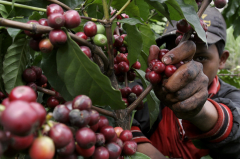
Egyptian beans are named according to origin, coffee beans are classified according to grades, raw beans, coffee beans.
Egyptian beans are named after places of origin and are usually named after provinces. This is a bit like the Bordeaux region of French red wine. Which producing areas are clear to everyone. Note: Chevy is a small producing area in Sidamo Province. Because of its unique flavor, it can become an independent brand. This naming method is very different from that of other African countries (including the hierarchical naming described below), which you often see.
2016-06-19 Egyptian beans origin nomenclature coffee beans grades classification raw beans
Brief introduction of cocoa and coffee bean industry in Cameroon
According to statistics released recently by the Ministry of Agriculture and Rural Development of Cameroon and the National Office of Coco and Coffee (ONCC), the FOB port Douala price of cocoa is more than 1000 CFF / kg, the FOB port Douala price of Robusta coffee beans is also more than 1000 CFF / kg, and the FOB Douala price of Arabica coffee beans is more than 1700 CFF / kg. Annual cocoa production in Cameroon for a long time
2014-06-27 Cameroon coffee bean industry coffee production
Coffee production in Cameroon continues to decline
Cameroon's coffee harvest year of 2013 and 2014 was officially launched on the 24th of the year in Melong, Moungo, in the Karabinhai region.
2014-07-11 Coffee news coffee production Cameroon
Italy and Germany become Cameroon's largest coffee exporters
During the coffee harvest year 2012/2013, Cameroon exported 4662 tons of Robusta coffee beans to Italy, accounting for 31.6% of the total production of Robusta coffee beans; Portugal followed closely, importing a total of 3745 tons of Robusta coffee beans from Cameroon, accounting for 25.4% of the total production of Robusta coffee beans.
2014-07-17 Coffee News Cameroon Coffee Big coffee exporter
Vietnam's coffee exports increased sharply from January to May
Vietnam exported 154000 tons of coffee in May, with an export value of US $336 million, the Ministry of Agriculture and Rural Development reported on its website on June 3. From January to May, Vietnam exported 966000 tons of coffee, an increase of 36.7 percent over the same period last year, and exports of US $1.96 billion, an increase of 29 percent over the same period last year.
2014-06-11 Coffee news Vietnamese coffee coffee export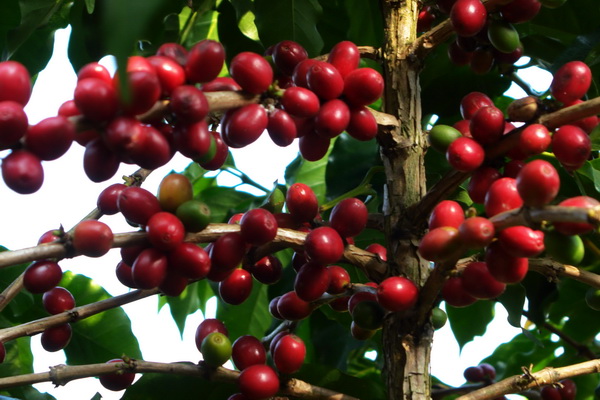
African flavor Ethiopian grade G1G2 G3 boutique coffee beans
Pre-auction process 1) farmers pick fresh coffee fruits; 2) farmers transport fresh fruits to rural cooperatives; 3) cooperatives sell fresh fruits to middlemen; 4) middlemen collect and transport fresh fruits to processing plants (washing or tanning process); 5) middlemen transport processed beans (with shell beans, Parchment Coffee) to auction houses to establish warehouses; 6) auction houses give official evaluation (
2016-07-15 Africa flavor Ethel Searle Biya grade division G1G2 boutique
Yunnan Coffee Factory enters the National Market
In January 2013, Yunnan Coffee Factory started construction of two shifts with an annual output of 5000 tons of instant 3-in-1 production line. At present, the project is progressing smoothly. Li Sijun, director of the Yunnan coffee factory, said: according to the plan, the project will be put into trial production in the second half of this year. The production line with an annual output of 5000 tons was put into production this year. The reporter learned that the instant 3-in-1 production line with an annual output of 5000 tons in two shifts of Yunnan coffee factory includes construction.
2014-08-06 Yunnan coffee factory marching national market 2013 January coffee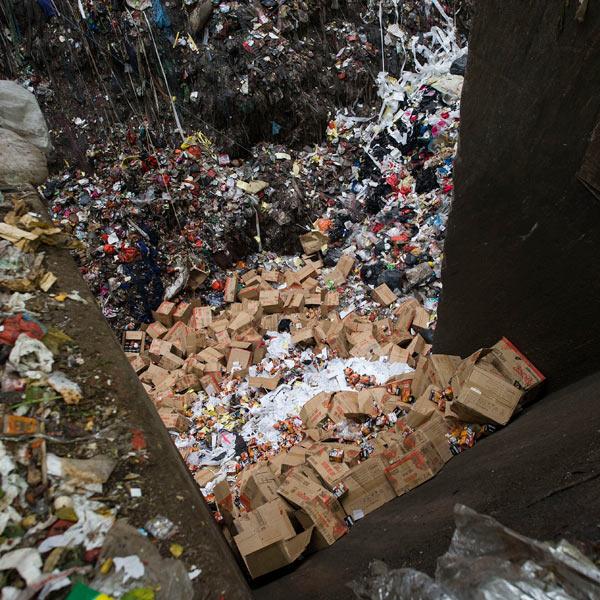
400 tons of Nestle coffee was destroyed as garbage for more than 20 years.
Coffee that was poured out. This part of the destruction of coffee still has a shelf life of nearly half a year. Such a mass destruction is said to be rare Nestle coffee, which tastes delicious. More than 30 years ago, with this classic advertisement, Nestle coffee is widely known. However, since last month, hundreds of tons of unexpired Nestle coffee in Dongguan warehouses have been destroyed as garbage, which seems to show the other side.
2015-03-02 400 tons Nestle coffee garbage destruction rare over the years
Thoughts on the unsalable Coffee beans in Yunnan
For Pu'er farmers, this year's coffee beans keep them awake. In previous years, people are looking for beans, but this year they are looking for people. At the beginning of the year, there were many people who bought, but we didn't want to sell. Now there are few people who want to buy, so we can't find a buyer if we want to sell. Li Xiaozhi, a villager of Kongguang Village, Mangkuan Township, Longyang District, Baoshan City, said in an interview: 90% of the villagers in our village grow coffee beans and grow noodles.
2014-05-30 Coffee beans are unsalable.
A brief introduction to the grading system of coffee beans in Ethiopia
The evaluation criteria of Egyptian beans were developed with the assistance of the American Fine Coffee Association (SCAA). (why can't Egypt, as the home country of coffee, formulate it independently? Yeah! Think about it)-Egypt fully implemented a central auction system in 2008 (used to be purchased by exporters)-briefly talk about some pre-auction processes. 1) Farmers pick fresh coffee fruit; 2) Farmers take fresh coffee
2014-08-22 Coffee knowledge Ethiopian coffee beans coffee bean rating system
Suzhou drinks 400 tons of coffee beans a year.
At present, there are more than 1600 coffee shops and cafes in urban and rural areas of Suzhou, and more than 500 western food restaurants and halls, with more than 10, 000 employees and consuming more than 400 tons of coffee beans a year. This is the news obtained by the reporter from the inaugural meeting of the Coffee and Western Food Industry Chamber of Commerce in the city yesterday afternoon. According to reports, since 2010, Suzhou coffee consumption showed a blowout growth. Except for foreign products such as Starbucks
2014-09-13 Coffee news Suzhou coffee beans 400 tons of coffee beans
Introduction of varieties and brands with flavor and taste characteristics in Ethiopian coffee manor with rich alcohol thickness
Coffee is Ethiopia's most important export cash crop and the main source of Ethiopia's foreign exchange earnings. Ethiopia's coffee exports account for about 3% of the world market, making it the eighth largest coffee exporter in the world. Coffee exports increased steadily from 58000 tons in 1990 to 110000 tons in 1995-1996 and remained at this level in the following years. 2001-2002
2016-08-09 Thickness richness Ethiopia coffee manor producing area flavor taste characteristics
World-famous Ethiopian coffee bean variety Kenyan flavor Sidamo flavor
The world-famous Ethiopian coffee mainly includes: 1. Limu coffee grows between 1400 meters and 2000 meters above sea level. washed coffee. Excellent quality, with intense nutty aromas, moderate acidity and wine intensity. Annual production of 29,000 tons. Gima coffee grows between 1400 and 1800 meters above sea level. Sunburn coffee. Slightly sour, nutty and long finish. annual output of
2016-04-22 world famous ethiel bia coffee beans varieties kenya flavor da
Angola Coffee Bean Price Flavor Description Grind Treatment Growing Environment Introduction
In the 1970s, commercial coffee production in Angola was about 180,000 tons per year. Uige Province coffee cultivation area of 161,000 hectares, annual output of 99,550 tons, is the largest coffee cultivation
2016-10-15 Angola Coffee beans Price Flavor Description Grinding Processing Planting Environment Yield
Thick mellow thickness of Ugandan coffee flavor manor characteristics of boutique coffee beans
Most of Uganda is located in the East African Plateau, with lakes, with an average elevation of 1000 to 1200 meters, which is known as the water village of the plateau. The western branch of the East African Rift Valley runs through the western border, with many rivers and lakes at the bottom of the valley. The western branch of the East African Rift Valley runs through the western border, with many rivers and lakes at the bottom of the valley. Between the rift zone and the eastern mountains is a broad shallow basin with many swamps. The eastern boundary is Mount Elgon, 4321 m above sea level; southwest
2016-08-12 Thick thick Uganda coffee flavor taste manor producing area characteristics boutique
What are the world-famous Ethiopian coffee? what coffee does Ethiopia have?
The world-famous Ethiopian coffee is mainly as follows: 1. Limu coffee grows between 1400 meters and 2000 meters above sea level. Wash the coffee. Excellent quality, with strong nut aromas, suitable acidity, with the intensity of wine. The annual output is 29000 tons. 2. Jima Coffee grows between 1400 and 1800 meters above sea level. Sun-baked coffee. Slightly sour, with nutty aromas and a long finish. Annual output
2016-04-28 World famous Ethiopia coffee which the world
Ethiopian coffee flavor manor area with nut flavor
In Ethiopia, the grading and quality control system of coffee is divided into three levels: producer, regional and national. All coffee is inspected by local inspection agencies before leaving the country of origin, and then re-tested at the coffee inspection and grading centers in Addis and Diredawa to determine its quality grade. Coffee is graded before auction and sale, for all involved in production, acquisition,
2016-07-14 Nuts aroma Ethiopia coffee flavor taste manor producing area
Ethiopian Coffee Flavor with acidity and texture introduction to the characteristics of Fine Coffee beans in Manor area
Ethiopian people are addicted to coffee. In 2003, domestic consumption accounted for 42.3% of the total output, with a per capita consumption of 3 kg. But more than half of the coffee produced each year is used for export to earn foreign exchange. The main exporters include the United States, Italy, the United Kingdom, Sweden, Norway, Greece, France, Belgium, Germany and Australia. Before 1974, the right to produce, process and trade coffee was controlled by
2016-08-08 Acidity texture Ethiopia coffee flavor taste manor producing area characteristics
The relationship between Kenyan coffee and Arabica coffee beans
In Ethiopia, the grading and quality control system of coffee is divided into three levels: producer, regional and national. All coffee is inspected by local inspection agencies before leaving the country of origin, and then re-tested at the coffee inspection and grading centers in Addis and Diredawa to determine its quality grade. Coffee is graded before auction and sale, for all involved in production, acquisition,
2016-06-13 Ethiopia Yega Sheffield Coffee Kenya Rabbi Coffee beans relationship